Mirano Continental · Bruxelles
Tokyo Party
December 24th, 31st 1994-95
Les deux nuits japonaises du Mirano Continental, Noël et Nouvel An 1994-95. Cette série réunit les photographies de la soirée, la fabrication du Goldorak géant de plus de 10 mètres de hauteur imaginé par Carl De Moncharline et installé dans le club, ainsi que les objets de l'époque : les blocs-notes du vestiaire de Momo (Monique Van der Weehe) et la carte de visite en forme de logo Pepsi Cola.
Le flyer
Le flyer de la soirée, recto et verso. Direction artistique Carl De Moncharline, création La Shampouineuse, illustrations manga d'Olivier Boscovitch. L'exemplaire est conservé dans les collections du MAD, Musée des Arts Décoratifs de Paris, sous le n° d'inventaire 2018.83.45.
Consulter la notice du flyerLa soirée
Mirano Continental, 38 chaussée de Louvain, Bruxelles - les 24 et 31 décembre 1994.
Les débuts des effets spéciaux en discothèque
Au début des années 1990, les effets spéciaux en discothèque en sont encore à leurs balbutiements. Grâce à son expérience avec la société anglaise Lemaitre Ltd, alors référence mondiale de la pyrotechnie d'intérieur, l'équipe dirigée par Yves Croiset, qui avait fait ses armes au Théâtre royal de la Monnaie, maîtrise déjà les effets utilisés dans les théâtres et les grands spectacles.
Mais un effet inédit reste à imaginer : transposer la tradition festive du confetti, chère aux carnavals belges, dans l'univers du club. Les systèmes de projection de confettis n'existent pas encore. Carl De Moncharline sollicite alors Olivier Van Cleemput, avec lequel il collabore régulièrement. Fils du maître artificier George-Alain Van Cleemput, dont l'entreprise familiale fondée en 1886 réalisait notamment les grands feux d'artifice du Nouvel An à Bruxelles, Olivier met son savoir-faire au service de cette recherche.
Dans son atelier, plusieurs essais sont réalisés pour mettre au point un système capable de propulser des confettis au-dessus du public. Les premiers tests avec des confettis classiques, trop lourds et trop compacts, conduisent à utiliser de grands pétales plus légers, créant un effet aérien spectaculaire qui fera sensation au Mirano.
Mis au point antérieurement à cette soirée, ces mortiers sont d'abord employés dans les productions nomades de Carl De Moncharline, les Who's Who's Follies, à Bruxelles comme à Paris, puis dans les soirées dont il assure la direction artistique au Mirano Continental. Le principe sera ensuite progressivement repris, perfectionné et industrialisé : aux mortiers d'origine, imposants, succéderont des dispositifs plus compacts et autonomes, les canons à confettis, aujourd'hui d'usage courant dans les spectacles et les événements à travers le monde.
La lumière
De part et d'autre du Goldorak, des Trilight équipés de Svoboda encadrent la structure. Imaginé par le scénographe tchèque Josef Svoboda (1920-2002), ce projecteur réunit neuf lampes halogènes de 250 W montées en série en basse tension (24 V) et produit un faisceau étroit et très puissant. Alignés côte à côte, ces appareils composent de véritables murs de lumière, une ligne lumineuse qui a marqué l'esthétique des discothèques des années 1990.
La mise en scène lumière est signée Yves Croiset, directeur technique du Mirano Continental, avec Fréquence Son et Lumière, prestataire et partenaire de la soirée. Fondée par Didier Streel, la société s'est d'abord fait connaître en Belgique par l'organisation des soirées Fréquence avant de devenir une référence du son, de l'éclairage et des effets spéciaux pour les discothèques et les grands événements. Aux commandes, les responsables lumière Yves Claes et Bertrand Stevens, qui lancent les faisceaux laser en réponse aux samples « Rétrolaser » envoyés par le DJ.
Olivier Van Cleemput réalise également des feux scintillants montés sur de longues perches, une charge d'aluminium et de poudre déclenchée électriquement au-dessus du public.
Samples « Fulguropoing » & « Astérohaches »
Les boîtiers de samples appartiennent alors au seul monde forain. Un modèle à touches, chargé des répliques de Goldorak (Fulguropoing, Cornofulgure, Planitron, Pulvonium, Astérohaches, Rétrolaser), est installé en cabine.
Fabrication du Goldorak de plus de 10 mètres
Le projet naît d'une proposition de Carl De Moncharline : installer un Goldorak géant au-dessus du dancefloor. Quatre métiers se répondent pour lui donner vie - le décor, le son, la pyrotechnie et la lumière. Compte tenu de la hauteur des plafonds du Mirano Continental, la réalisation est confiée au décorateur Pierro Vandermeeren, assisté de son fils Laurent Oswald. La figure dépasse les dix mètres de hauteur : les éléments sont sculptés en atelier puis assemblés sur place, au Mirano Continental.
Le montage au Mirano Continental
Les éléments sculptés quittent l'atelier par pièces séparées et sont assemblés sur place, au-dessus du dancefloor. Un échafaudage monté pour l'occasion permet de hisser et de fixer la figure ; il est démonté avant l'ouverture et ne fait pas partie du décor.
Le Polaroid
Inventé par Edwin H. Land et lancé en 1948, le Polaroid a révolutionné la photographie en donnant une image en quelques minutes, sans laboratoire. Symbole des années 1970 à 1990, l'appareil instantané a marqué la culture populaire, les soirées et les souvenirs personnels par son côté spontané : chaque cliché est une pièce unique.
Objets & mémorabilia
Les blocs-notes placés à côté du vestiaire de Momo (Monique Van der Weehe) servaient au public à se laisser des messages : le téléphone mobile n'avait pas encore l'usage qu'on lui connaît aujourd'hui. Leurs textes sont signés Philippe Thito, copywriter belge passé par HHD Ogilvy & Mather, Kadratura, LHHS, DDB, McCann Erickson, Y&R Brussels et Grey Brussels, aujourd'hui directeur de création chez Mostra. S'y ajoute la carte de visite de Carl De Moncharline, découpée en forme de logo Pepsi Cola : à chaque soirée correspondait une nouvelle carte, conçue dans l'esprit graphique de la nuit, comme une signature.
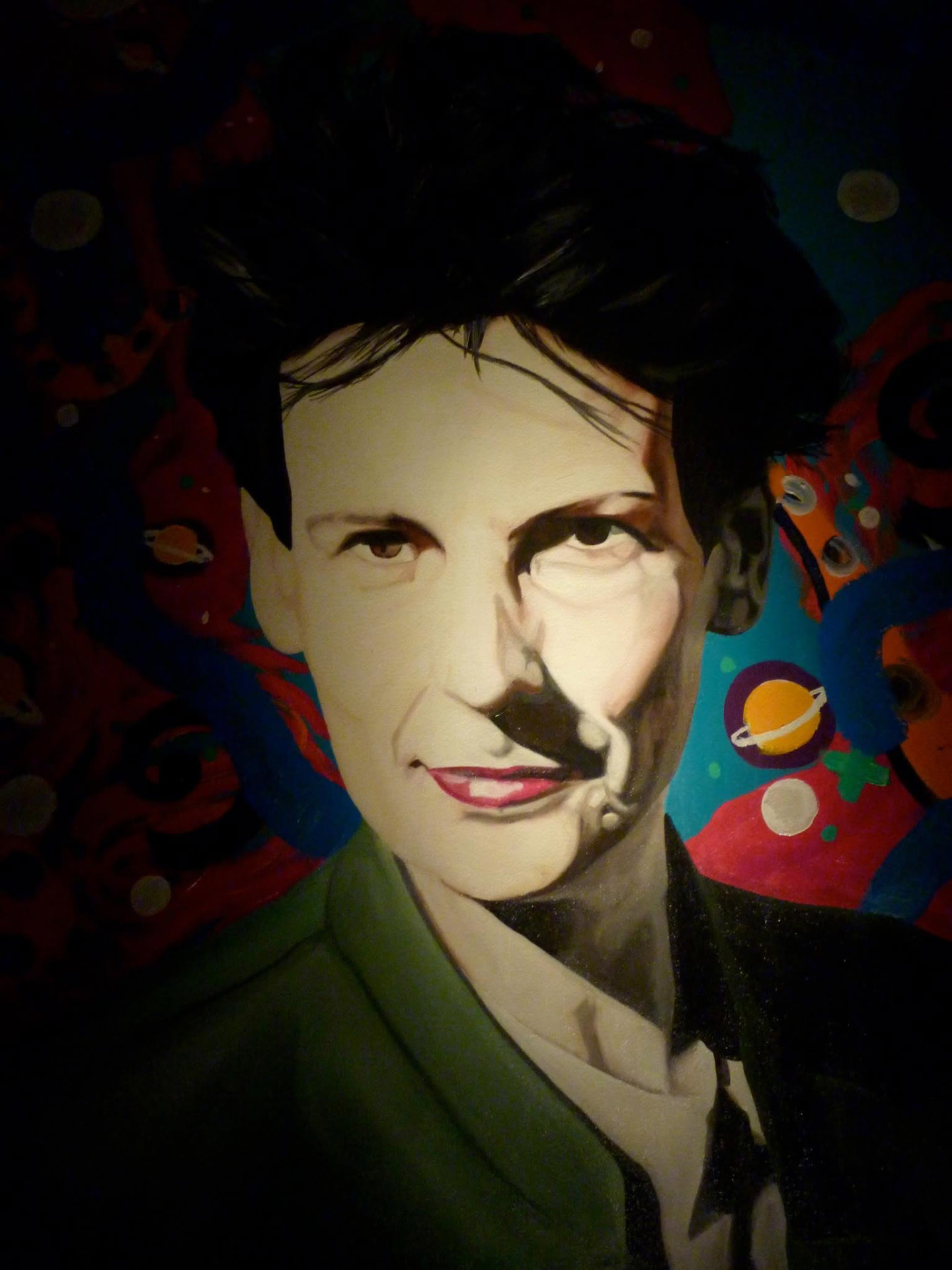
Momo (Monique Van der Weehe)
Vestiaire du Mirano Continental. Partie rejoindre les étoiles en 2024.
Crédits photographiques
Frédéric Leemans
Photographe né en 1966, actif dans les clubs belges depuis plus de trente-cinq ans ; son travail a été présenté dans l'exposition « Night Vision : 25 ans de clubbing made in Belgium ».
Contexte
Crédits
- Administrateurs
- Marco Rolland, Paul Sterck
- Directeur
- Jean-Pierre Mels
- Directeur artistique
- Carl De Moncharline
- Directeur technique
- Yves Croiset
- Chef décorateur
- Aldo Gigli
- Création graphique du flyer
- La Shampouineuse
- Illustrations manga
- Olivier Boscovitch
- Décor Goldorak
- Pierro Vandermeeren
- Assistant décor
- Laurent Oswald
- Textes des blocs-notes
- Philippe Thito
- Responsables lumière et laser
- Yves Claes, Bertrand Stevens
- Son et lumière
- Fréquence
- Artificier
- Eelco de Jong
- Pyrotechnie et mortiers à confettis
- Olivier Van Cleemput
- DJs
- Olivier Gosseries, Jos, Olivier Tjon, Petit Pascal, Philippe Petit
- Illusionniste
- Ashras (production No Limits)
- Vestiaire
- Monique Van der Weehe, dite Momo
Partager une photo de soirée
Vous avez photographié une soirée au Mirano Continental, aux Who's Who's Follies au Fuse en Belgique, au Queen, aux Bains, au Palace, au Folies Pigalle, au Palace à Paris, au Who's Who's Land, au Wood, au Flore, à l'Impérial ou dans un autre lieu où Carl De Moncharline organisait des soirées ? Vous détenez peut-être un négatif, un tirage original ou un fichier en meilleure résolution que celui présenté ici. Chaque cliché est un témoignage : votre envoi aide à documenter ces nuits et les rend visibles dans l'archive.